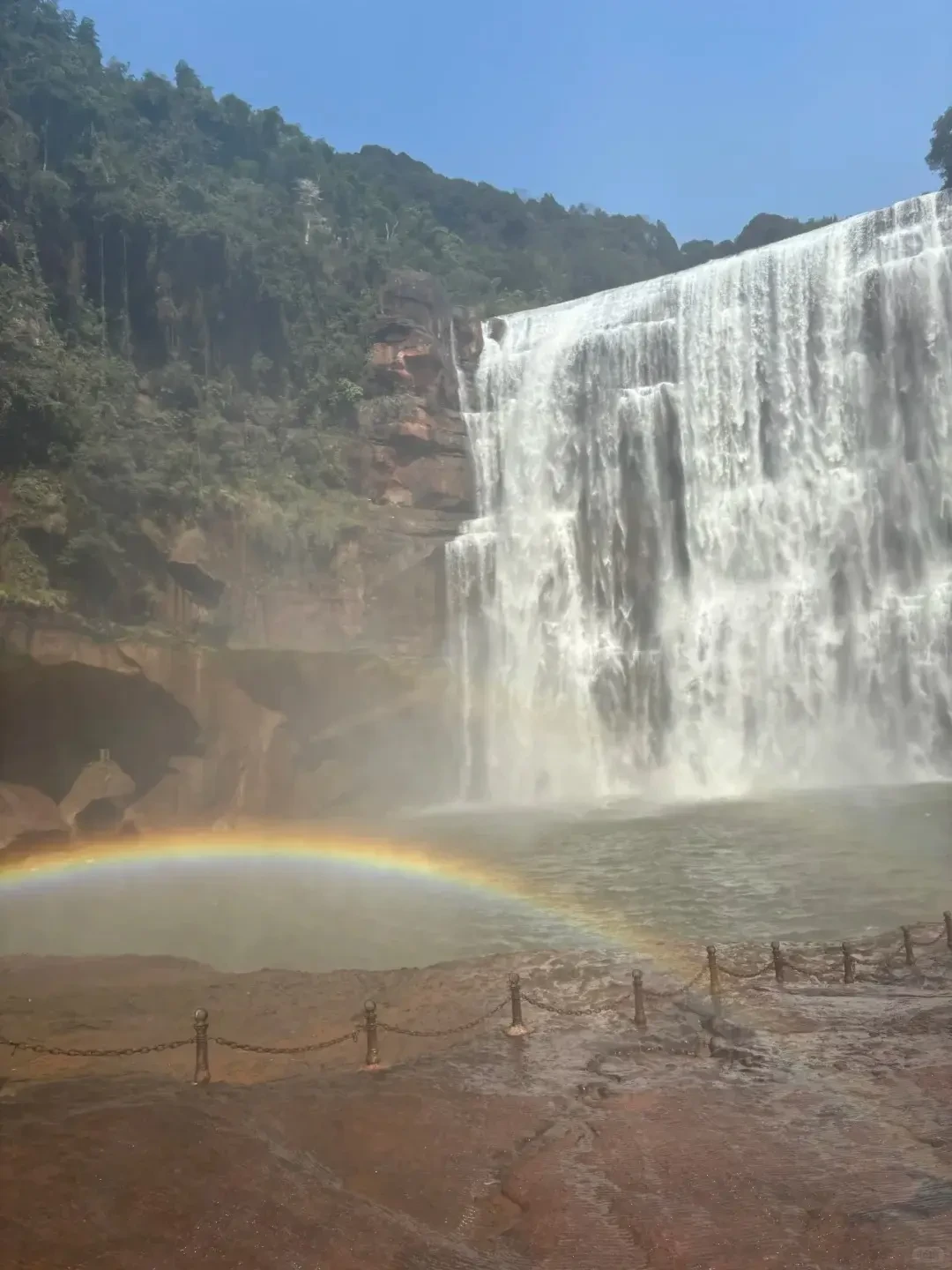
7 Reasons Overseas Chinese Should Visit Guizhou Between 11 and 2: Fewer Crowds, Lower Prices, and Scenery That Rivals Peak Season
Last month in 12, Mr. and Mrs. Wang from Los Angeles called us, saying they wanted to visit Guizhou over the Thanksgiving holiday plus a few days of annual leave. However, online searches yielded almost exclusively summer travel guides; information for autumn and winter was scarce. Friends advised her that "there's nothing much to see in Guizhou during winter," but she wasn't willing to give up and worried about making a wasted trip.
We arranged a 5-day itinerary for her. After completing the trip, Ms. Wang sent a message: "I'm glad we came. It's less crowded, beautiful, and affordable. I didn't realize winter would be this great—I wouldn't have squeezed into summer two years ago."
We frequently encounter this situation every year from 11 to 2. Many overseas Chinese only have extended time off during the end-of-year holidays but worry that visiting Guizhou during the off-season means missing out on key experiences. Today, we share our real-world experience guiding international guests through Guizhou in autumn and winter over the years. After reading this, you'll know whether it's worth the trip.
Reason 1: Lower water volume in winter, but no queues.
To be honest, the water volume of Huangguoshu Waterfall in autumn and winter is indeed lower than from 6 to 8. While the waterfall is powerful during the peak season, it becomes a more delicate version in 12 and 1—the curtain thins and narrows, looking less spectacular from afar compared to summer.
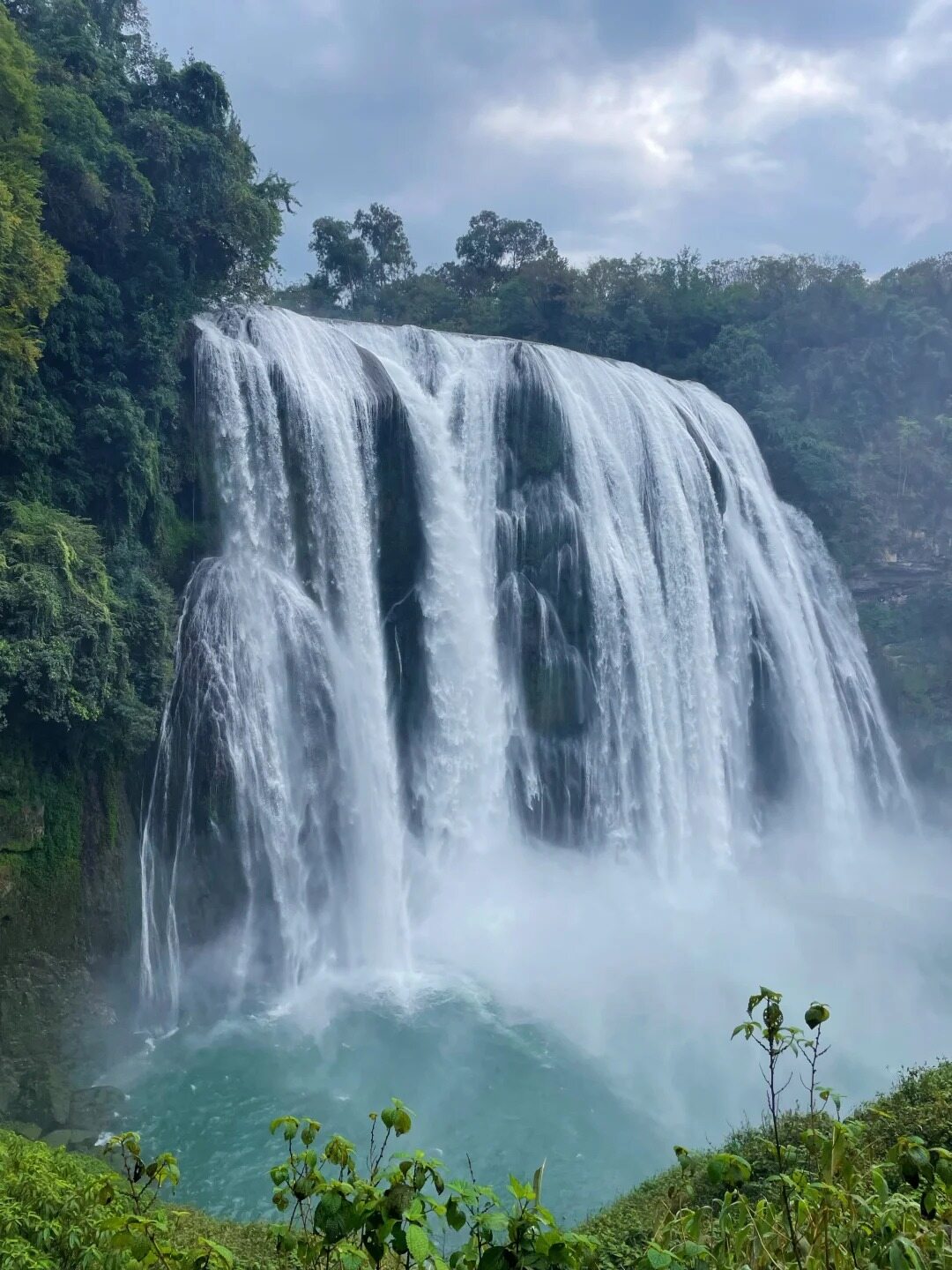
But visiting Huangguoshu in autumn and winter offers one major advantage you won't get during summer: no wait time at the Water Curtain Cave. During the peak summer season, queues often last 1 to 2 hours; we frequently lead tours starting as early as 7 a.m. to be among the first inside. From 11 to 2, you can enter the cave immediately upon arrival—take your time to explore and photograph without being rushed by others behind you.
Huangguoshu Scenic Area: 180 yuan in peak season, 160 yuan in off-peak. Saving a few yuan from Province 20 is minor, but the full experience of the park is completely different. Plus, Shitou Tan Waterfall and Yinlian Zhui Waterfall right by the main falls look even better in autumn and winter—with moderate water flow and clearer formations than during the high-water season.
MeituShuo Reminder:If you visit between 12 and 1, we recommend dedicating a full day to Huangguoshu: start with the Grand Waterfall and Water Curtain Cave in the morning, then head to Doupotang and Tianxingqiao in the afternoon. The Silver Chain Falls at Tianxingqiao are especially stunning in autumn and winter; many summer visitors miss them due to tight schedules.
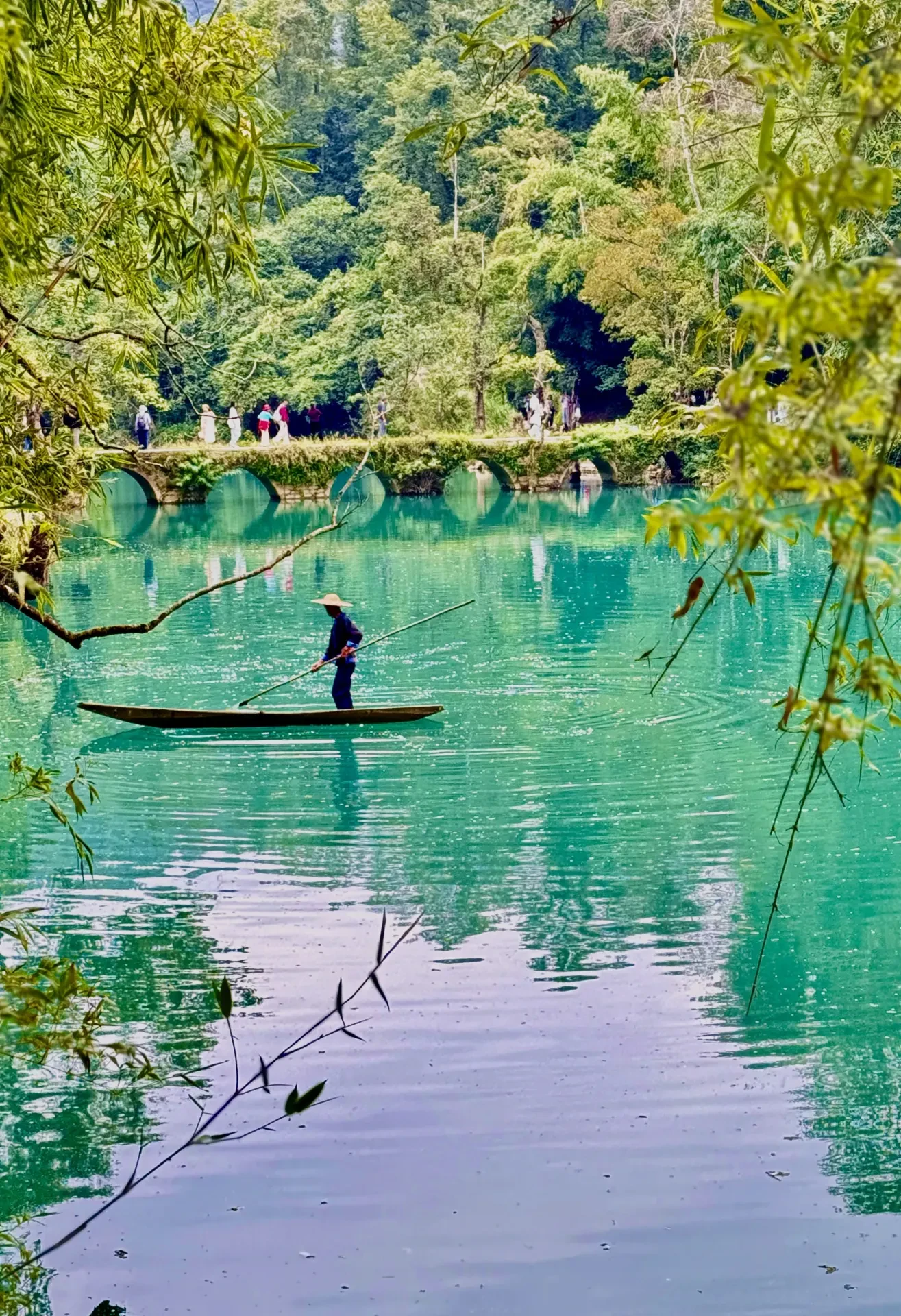
Reason 2: The water at Xiaoqikong in Libo is clearest during autumn and winter.
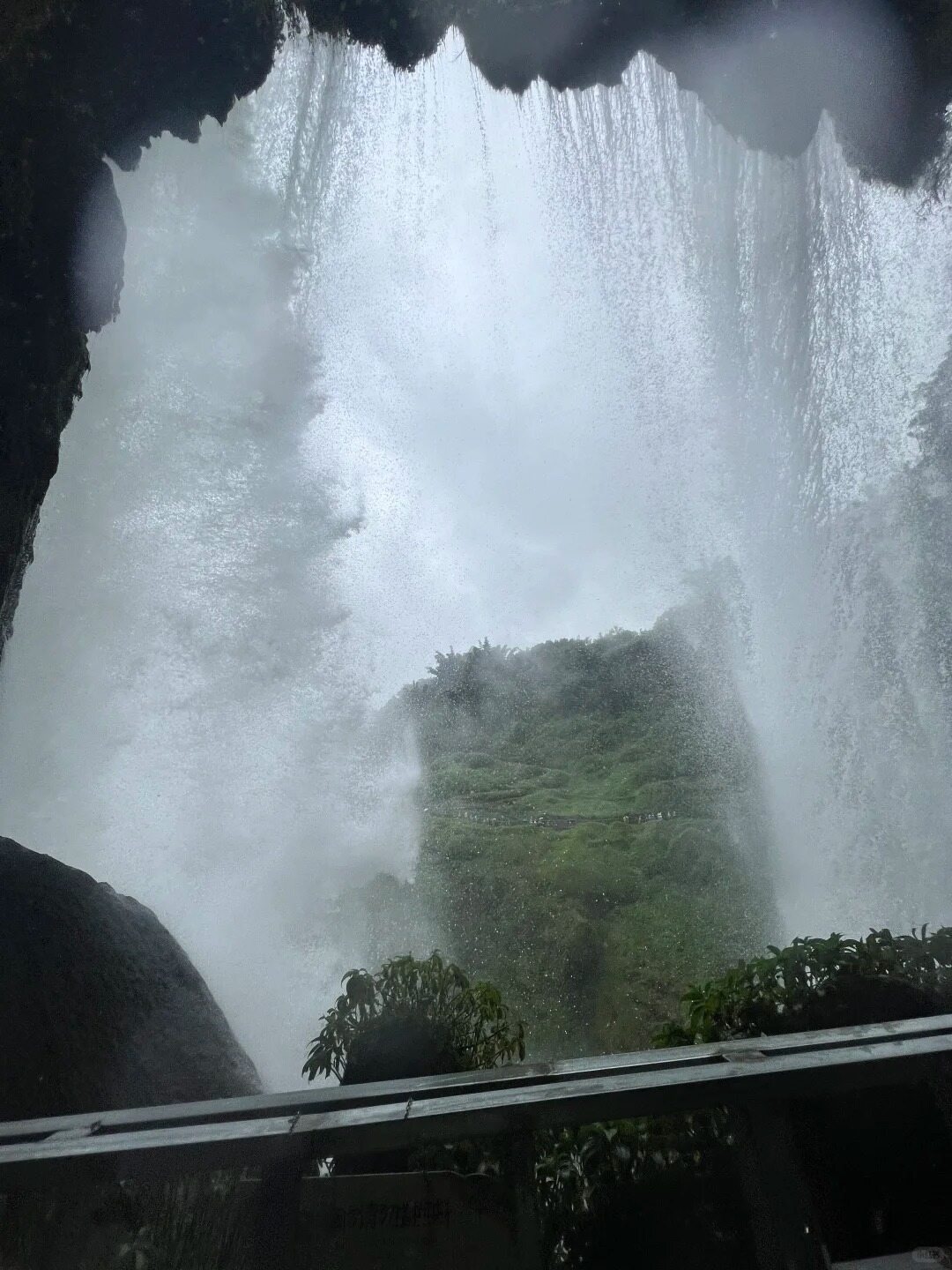
Many people think Xiaohikong is only worth visiting in summer, but it's actually the opposite. The water is clearest from 11 to 1.
During the summer, heavy rains often leave the river water muddy and yellow, a condition that can persist for days after rainfall. In autumn and winter, however, it's the dry season; as sediment settles, the water turns an emerald green with exceptional clarity. The ancient bridge at Xiaoqikong offers stunning views where golden mountain foliage reflects on the water's surface—snap a photo and you'll get a masterpiece every time.
Xiaoqikong entrance fee is 130 yuan (includes scenic area shuttle bus). Walking the full 6-kilometer trail in autumn and winter is more comfortable than in summer—pleasant temperatures around 20°C make it just right.
MeituShuo Reminder:11 is the ideal window to visit Xiaoqikong, offering a perfect blend of autumn foliage and clear water during the dry season. Although 12 and 1 also feature crystal-clear water, the leaves have already fallen, slightly diminishing the scenery. If you can only visit in 12 or 1, Xiaoqikong is still worth it—the water itself looks better than in summer.
Reason 3: Zhijin Cave maintains a constant temperature year-round, so it's warmer inside than outside during winter.
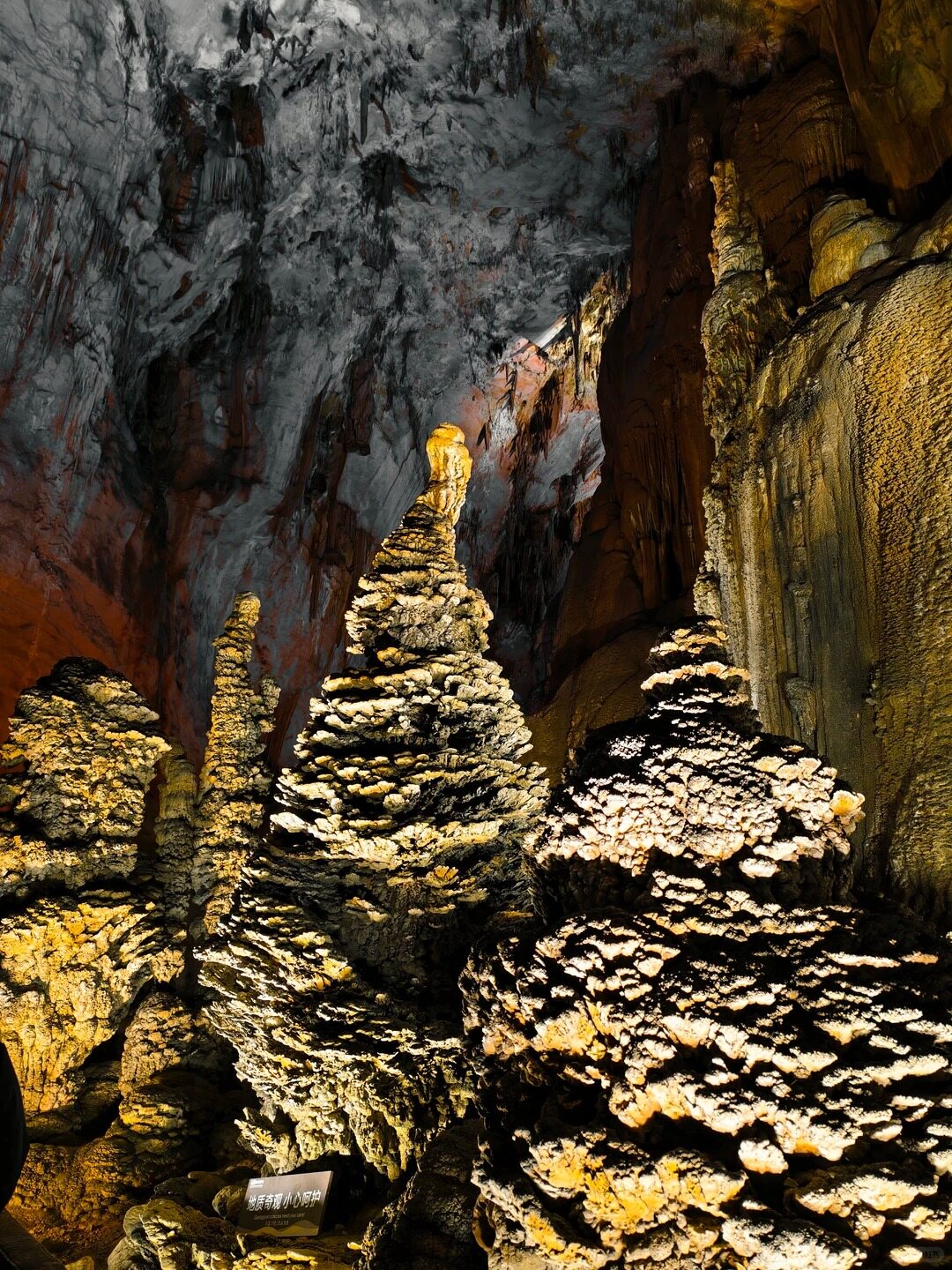
Zijin Cave is a limestone cave with a year-round constant temperature of approximately 14°C. In Guiyang, outdoor temperatures in 12 and 1 can drop as low as 3 to 5°C, making the cave feel surprisingly warm.
Zijin Cave entrance ticket: 120 CNY. Visit duration: 2 to 3 hours; total trail length: 6.6 km. The stalactites, stalagmites, and flowstone formations inside the cave are unaffected by the seasons and remain equally spectacular year-round. During off-peak seasons, there are fewer crowds, allowing guides to provide a relaxed, detailed tour—unlike the rushed experience during peak summer months.
Reason 4: You can catch the rape blossoms in Wanfenglin by 2 month.
If your itinerary includes mid-to-late 2, Wanfenglin is a must-visit.
The rapeseed flowers in Wanfenglin, Xingyi typically begin blooming around mid-2. The entire valley turns golden, complemented by the karst cone-shaped peaks, the Buyi ethnic villages below, and rice paddies—a landscape you won't find anywhere else in China. Many people don't know that China's earliest rapeseed blooms occur in Xingyi, Guizhou, a full month before those in Wuyuan, Jiangxi.
Driving from Guiyang to Xingyi takes about 4 hours. Alternatively, take the high-speed train to Panzhou and transfer; this route takes approximately 3 hours. We recommend spending 2 days in Wanfenglin: Day 1 to see the rapeseed flowers and Bagua fields, and Day 2 to explore nearby Majinghe Canyon. While winter waterfalls have less flow, the ice formations are stunning.
Reason 5: Traveling to Guizhou in autumn and winter costs significantly less than during summer.
This is the most practical point. For a private car tour covering Huangguoshu, Xiaoqikong, and Xijiang Miao Village over 5 days, peak summer season rates range from 5000 to 6000 yuan (including fuel and tolls). Prices drop by 1000 to 1500 yuan during the off-peak months of 11 to 2.
The reason is simple: autumn and winter are the off-season for local ground services, so vehicle and driver coordination is less tight. Accommodation is also cheaper. During the summer peak season, a wooden stilt house homestay in Xijiang Miao Village costs 400 to 600 per night; during the off-season, you can get the same quality room for just 200 to 300.
Mr. Chen and his family, who recently returned from Malaysia, visited last 12 month. Their per-person cost for a private car tour plus accommodation over 5 days was under 3000 yuan. Mr. Chen noted that taking the same itinerary during summer vacation would have cost at least 50% more.
What to keep in mind when visiting Guizhou in autumn and winter
After highlighting the benefits, let's also cover what you need to watch out for when visiting Guizhou in autumn and winter.
The first pitfall is underestimating the damp cold in southern China. Many overseas Chinese assume that because Guizhou is in the south, winters won't be too harsh. In reality, Guiyang's temperatures from 12 to 2 drop to 3-10°C with high humidity (often above 80%), creating a biting chill that penetrates deep into your bones—worse than -10°C in the north. What to wear? Thermal underwear, fleece, and a hardshell jacket (or lightweight down jacket) are essential. Footwear must be non-slip and waterproof. Walking on the bluestone paths of Miao villages and ancient towns can be treacherous when ice or freezing rain forms.
The second pitfall: don't overpack your itinerary. In autumn and winter, Guizhou often sees rainy weather; it's common to go 5 to 6 days without sunshine, and highway closures due to heavy fog do happen. We recommend leaving 1 flexible days. Schedule outdoor attractions early in the trip so you can swap them for indoor sites like Zhijin Cave or a Miao village experience if fog rolls in. One advantage of hiring a private car with a local driver is that they know the weather patterns and road conditions better than any navigation app.
If you choose our Guizhou car charter service, a 5-seater sedan for 5 days (including fuel and tolls) costs approximately 4000 to 4500 CNY during the off-season. A 7-seater business van is around 5500 to 6500 CNY. Meitu's private tours in Guizhou will flexibly adjust itineraries based on weather and road conditions—no need to worry.
At the end
For the couple from Los Angeles, Mr. and Mrs. Wang, who remarked on their way out, "If I had known winter was this great, I wouldn't have squeezed in during summer two years ago." While a bit exaggerated, visiting Guizhou in autumn and winter truly offers advantages summer can't match: fewer crowds, stunning scenery, and lower prices. Golden ginkgo trees in 11, plum blossoms blooming in 12, frost-covered branches in 1, and rapeseed flower fields in 2—each season brings something unique to see.
Meitu Travel specializes in tourism for overseas Chinese in Guizhou. Our core services include private car rentals with drivers, bespoke travel planning, and small-group tours, all tailored flexibly to your schedule and preferences.
Chat with us on WeChat first:18285125548 (Phone / WeChat)Free route planning for you. No deposit required upfront.
Read more
Related Articles
How much does a 7-day private car tour in Guizhou cost for overseas Chinese? How to choose between 5-seater and 7-seater models, plus a full breakdown of classic loop pricing.
2026-10-26
Overseas Chinese Family of Four: 10-Day Guizhou Full-Itinerary Private Tour Log – Guiding You Through Zhijin Cave, Wumeng Grassland, and FAST
2026-10-23